Domain
FINANCIAL DOCUMENT ANALYSIS
How do you transform thousands of pages of financial reports into conversations while preserving citations, traceability, and retrieval accuracy?
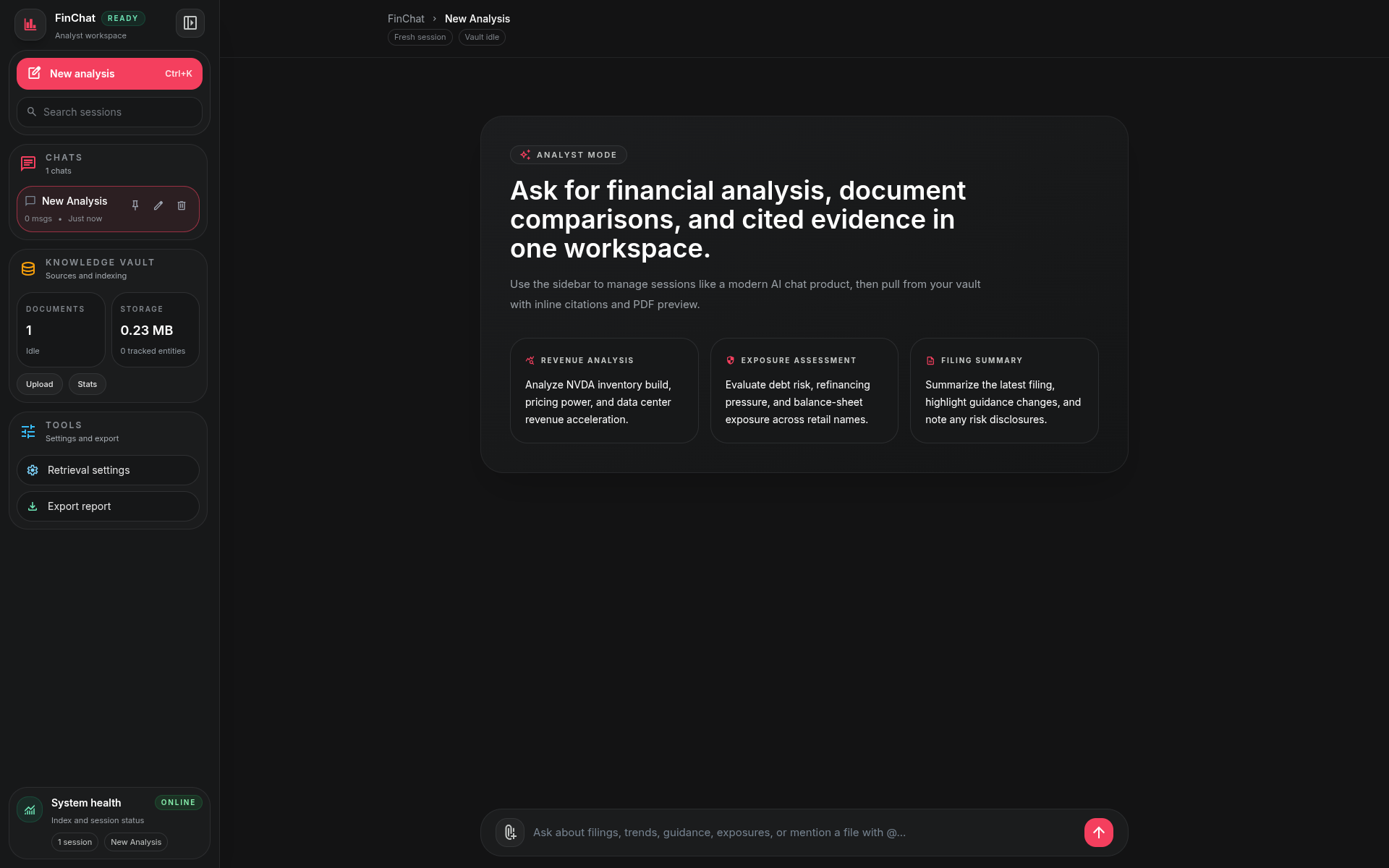
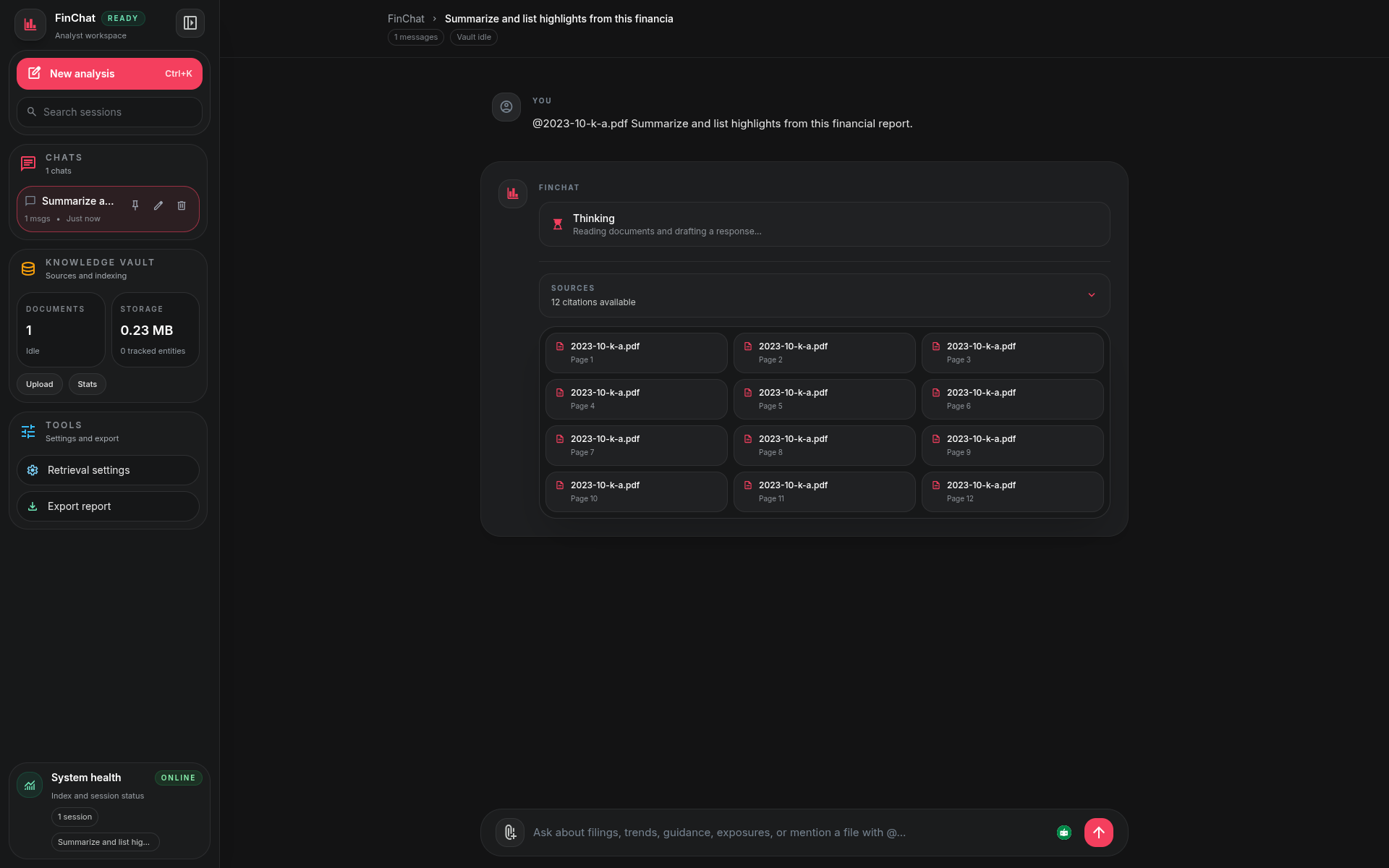
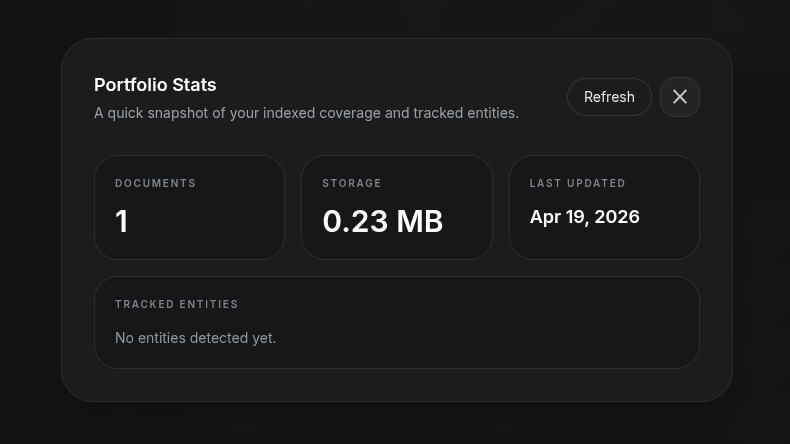
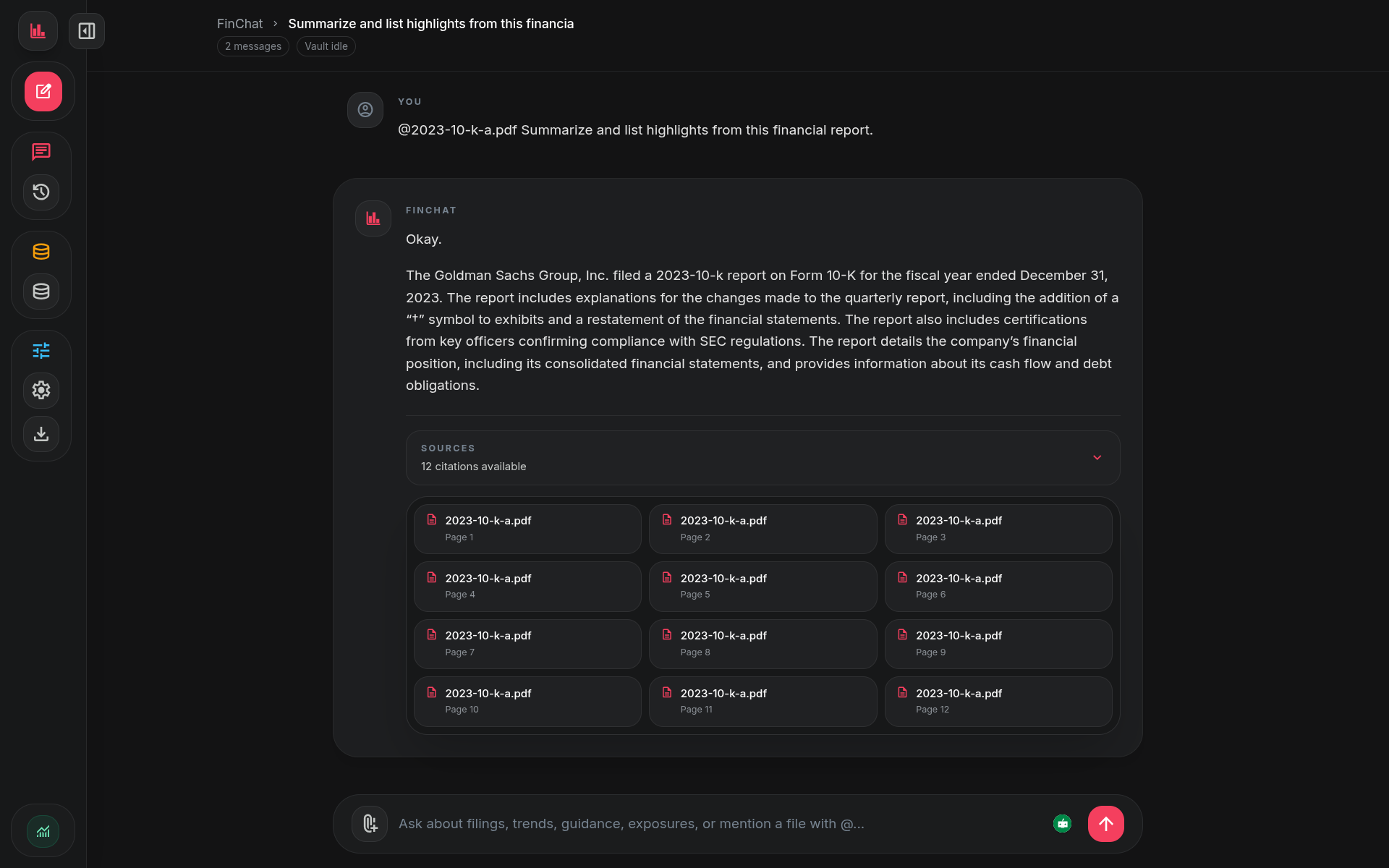
FINANCIAL DOCUMENT ANALYSIS
HYBRID DENSE + SPARSE SEARCH
BGE BASE EN V1.5
CROSS ENCODER PIPELINE
LOCAL LLAMA CPP API
FASTAPI + SSE STREAMING
FAISS + BM25
TAILWIND WEB WORKSPACE
INLINE PAGE CITATIONS
GROUNDED AI RESPONSES
Every answer is only as good as the evidence behind it.
Every query begins with retrieval, not generation. Hybrid search gathers the most relevant document passages before the language model is invoked, ensuring responses are based on retrieved evidence rather than model memory.
Every generated statement is linked back to its originating document, page, and supporting context. Users can verify claims instantly without leaving the workspace, making every response transparent and auditable.
The model answers only from the evidence provided by the retrieval pipeline. When sufficient context cannot be found, FinChat prioritizes transparency over speculation, reducing unsupported or fabricated responses.
Follow-up questions reuse the existing conversational context while retrieving fresh evidence when needed. This allows users to explore complex financial documents through a natural dialogue without losing accuracy or source traceability.
Most document question answering systems treat the answer as the product. They optimize for fluent responses while hiding the retrieval process that produced them. When evidence is disconnected from generation, users have little way to verify whether a response reflects the source material or the model's prior knowledge.
FinChat was built on a different principle. Generation should never be the first step. Before a language model produces a response, relevant evidence must be identified, ranked, and validated. The system exists to surface information from documents rather than replace them with synthetic knowledge.
This philosophy shapes the entire architecture. Every uploaded document is parsed, segmented into semantically meaningful chunks, indexed through both dense and sparse retrieval methods, and reranked using a cross encoder before reaching the language model. The model never searches the document itself. It reasons only over the evidence prepared by the retrieval pipeline.
Grounding generation in retrieved context improves both reliability and transparency. Every response remains connected to its originating document through inline citations, allowing users to inspect the exact passages that informed the answer. When relevant evidence cannot be retrieved with sufficient confidence, the system favors restraint over speculation instead of generating unsupported conclusions.
Ultimately, the quality of a document intelligence system depends less on how convincing its responses appear and more on how faithfully those responses represent the underlying source material. Language models communicate information, but retrieval determines its validity. In a retrieval first system, trust is established before a single token is generated.